Encuentros con la buena gente / Meeting good people: Konstantinos Destounis
“La música siempre fue una cura para la gente”
“Music has always been a cure for people”
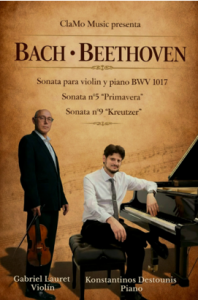
El pasado 29 de abril asistimos al concierto de violín y piano organizado por ClaMo Music en el Auditorio Víctor Villegas de Murcia. El violinista Gabriel Lauret y el pianista Konstantinos Destounis ofrecieron un maravilloso concierto que el público agradeció con grandes y afectuosos aplausos: la Sonata para violín y piano BWV 1017 de Bach y las sonatas nº5 “Primavera” y nº9 “Kreutzer” de Beethoven.
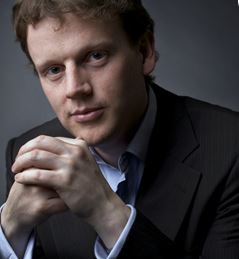
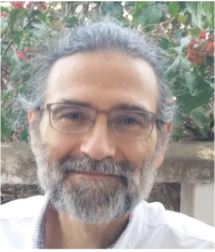
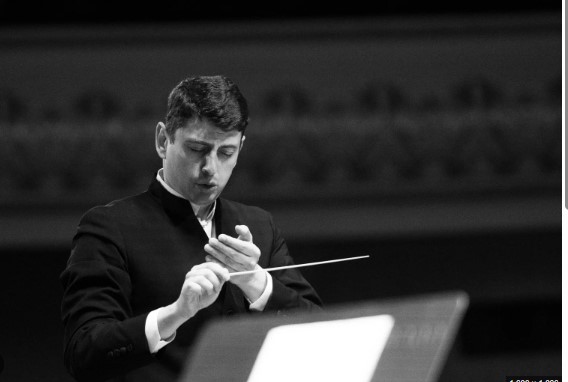
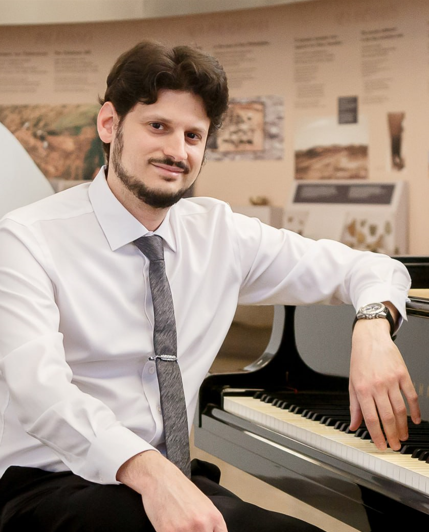
Después del concierto, tuvimos la oportunidad de hablar con Konstantinos Destounis. Este pianista, laureado con numerosos premios nacionales e internacionales, nació en Atenas en 1991 y comenzó a tocar el piano a muy temprana edad. Después de completar sus estudios en el Conservatorio Helénico, la Universidad de Macedonia en Grecia y el Mozarteum de Salzburgo, obtuvo un doctorado en el Royal College of Music de Londres. Actualmente es profesor de piano en la Universidad Jónica de Corfú, Grecia, y mantiene una carrera internacional muy activa como solista.
 On April 29th, we attended a violin and piano concert organized by ClaMo Music at the Víctor Villegas Auditorium in Murcia. Violinist Gabriel Lauret and pianist Konstantinos Destounis played a wonderful performance that the audience received with warm and enthusiastic applause. The program featured Bach’s Violin Sonata BWV 1017, as well as Beethoven’s Sonata No. 5 “Spring” and Sonata No. 9 “Kreutzer”.
After the concert, we had the opportunity to speak with Konstantinos Destounis. This award-winning pianist, recipient of numerous national and international prizes, was born in Athens in 1991 and began playing at a very young age. . He is currently a piano professor at the Ionian University in Corfu, Greece, and maintains a very active international career as a soloist.
¿Qué hay de tu trabajo con Theodore Antoniou?
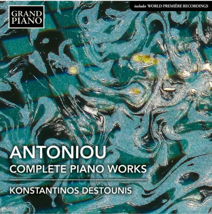
Theodore Antoniou fue un compositor griego muy conocido y colaboramos hacia el final de su vida cuando grabé sus obras completas para piano, publicadas por Naxos. Fue una grabación de estreno mundial de obras que nunca se habían grabado antes. Al mismo tiempo Theodore Antoniou fue el tema de mi tesis doctoral en el “Royal College of Music” de Londres
What about your job with Theodore Antoniou?
Theodore Antoniou was a very well known Greek composer and we collaborated toward the end of his life when I recorded his complete piano works, which were published by Naxos. That was a world premiere recording of works that had never been recorded before. At the same time, Theodore Antoniou was the subject of my doctoral thesis at the Royal College of Music in London
Estamos de acuerdo contigo en que la industria musical es muy competitiva. ¿Cómo crees que afecta al músico y a la música misma?
 El campo de la música es competitivo porque hay muchos músicos y no ofrece muchas oportunidades para tocar, ya que no hay mucha gente que vaya a conciertos. Por tanto, si hubiera más oportunidades, sería menos competitivo. Obviamente, afecta a los músicos porque lidian constantemente con la ansiedad. Nos gustaría vivir de la música y hacer lo que amamos, pero si eres un buen músico y no tienes conciertos o no tienes de qué vivir, es un problema real. Esta es también una preocupación para los padres y las familias cuando los hijos dicen que quieren ser músicos. Los músicos jóvenes piensan en cómo impresionar al jurado, por lo que su objetivo es ganar el premio en lugar de disfrutar de la música… de forma que afecta la psicología de las personas. Cuando les dije a mis padres que quería ser músico, me apoyaron mucho y me dijeron “haz lo que ames y pase lo que pase…”, ¿ves? Y creo que tomé una muy buena decisión en mi vida al convertirme en músico porque la música es mi vida, es todo para mí.
We agree with you that the music industry is very competitive. How do you think it affects the musician? and the music itself?
The field of music is competitive because there are many musicians and it doesn’t give you many opportunities to play, as there are not many people going to concerts. So, if there were more opportunities it would be less competitive. Obviously, it affects musicians because they constantly deal with anxiety. We would like to make a living from music and do what we love, but if you are a good musician but you don’t have concerts or you don’t have anything to live on, it is a real problem. This is also a concern for parents and for families when children say that they want to be musicians. Young musicians think how they can impress the jury, so their goal is to win the prize rather than enjoy the music…, in this way it affects the psychology of people. When I told my parents I wanted to be a musician, they were very supportive and they told me “do what you love and whatever happens…”, you see? And I think I made a very good choice in my life to become a musician because music is my life, it is everything for me.
También mencionas que es necesario un entusiasmo infinito para lograr una interpretación convincente. ¿De dónde viene este entusiasmo infinito? ¿Podemos desarrollar este entusiasmo o trabajar en él?
Para lograr la interpretación se necesitan dos cosas: entusiasmo, que es el amor por la música, y conocimiento. Cuanta más música escuchas, más entusiasta te vuelves. Desde que era adolescente, he escuchado música con mucho entusiasmo. He intentado escuchar muchas grabaciones; por ejemplo, tenía 34 grabaciones de las baladas de Chopin y 30 de los conciertos de Rachmaninov, y solía escucharlas todas y compararlas. Enseño en la universidad y lo que también veo en mis alumnos es que los que se desarrollan como músicos son los que escuchan mucha música. Si no escuchas, no puedes amarla y, si no la amas, lo haces mecánicamente. No sale de dentro, y debe salir de dentro.
You also mention that an endless enthusiasm is necessary to achieve a convincing interpretation. Where does this endless enthusiasm come from? Can we develop this enthusiasm or can we work on it?
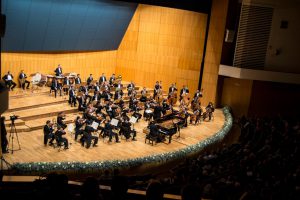 In order to achieve the interpretation you need two things: enthusiasm, which is the love for music, and knowledge. The more music you listen to, the more enthusiastic you become. Since I was a teenager, I’ve listened to music very enthusiastically. I’ve tried to listen to many recordings, let’s say, I had Chopin’s balads in 34 recordings and the Rachmaninov concertos in 30 recordings and I used to listen to all of them and also to compare. I teach at the university and what I also see in my students is that those who grow as musicians are those who listen to a lot of music. If you don’t listen, you can’t love it and, if you don’t love it, you do it mechanically. It doesn’t come from inside, and it must come from inside.
Dices que para hacer arte hay que ir mucho más allá, llenando cada nota de significado. ¿Qué significado pones en estas notas? ¿De dónde viene?
Depende del compositor y de la obra. Si tocas cada nota exactamente como está escrita, suenas como una máquina o una computadora; si pones las notas en una computadora y presionas “play”, lo que escuchas es horrible, aunque esté tocado perfectamente. Eso significa que un músico tiene que descubrir todo lo que no se puede escribir en la partitura: la vida en cada frase o en cada parte de la música. Tienes que encontrar una palabra, por ejemplo, este tema: ¿qué es para mí? ¿Es nostálgico? ¿Es un drama? ¿Es como una decepción? Tienes que encontrar la palabra adecuada y luego intentar que suene así. Primero, tienes que entender de qué se trata y luego intentar tocarlo. Además, entendemos que no existe una única verdad para todos; puede ser diferente, y por eso cada uno toca de manera distinta. Así que, lo primero que hay que hacer es encontrar qué significa para ti y luego convencer al público.
You say that, in order to make art, the musician needs to go much further, filling every note with meaning. What meaning do you put in these notes? Where does it come from?
It depends on the composer and the work. If you play every note exactly as it is written, you sound like a machine or a computer and if you put the notes into a computer and press play, what you hear is horrible, even if it’s played perfectly. That means a musician has to discover everything that cannot be written in the score, the life in every phrase or in every part of the music. You have to find a word, let’s say, for this theme, what is it for me? Is it nostalgic? Is it a drama? Is it like a disappointment? You have to find the right word and then try to make it sound like that. First of all, you have to understand what it is about and then try to play it. Also, we understand that there isn’t one single truth for everybody; it can be different, and that’s why everyone plays differently. So, the first thing to do is find what it means for you and then convince the audience.
Hoy en día, la sociedad se enfrenta a una situación muy difícil; hay varias guerras simultáneas en todo el mundo, desastres climáticos y nuevas enfermedades… muchas cosas. Creemos que la gente sufre aunque no siempre seamos conscientes de ello; sufren por dentro, muy profundamente. ¿Cómo puede la música ayudar a la gente? ¿Es siquiera posible? ¿Cuál es el papel de la música?
 Estoy de acuerdo en que la gente sufre, pero los desastres y las enfermedades… no ocurren solo hoy, siempre ha sido así y la música siempre ha sido una cura para la gente. Para mí, la música es lo único que puede dar respuesta a preguntas existenciales. Hubo un compositor, no recuerdo su nombre…, que dijo que si no hubiera enfermedades ni sufrimiento en el mundo, no habría razón para escribir música. Beethoven, por ejemplo, sufría, se estaba quedando sordo y tuvo que enfrentarse a esto. Era un gran músico y se dio cuenta de que estaba perdiendo la audición, y todo eso está en su música. Su música se volvió diferente. La música trata sobre nuestros sentimientos y los sentimientos a menudo están vinculados al sufrimiento.
Today, society is facing a very difficult situation; there are several wars happening simultaneously around the world, climate disasters and new diseases…, many things. We do believe that people are suffering even if we are not always aware of it; they suffer on the inside, very deeply. How can music help people? Is it even possible? What is the role of music?
I agree that people are suffering, but disasters and deseases… don’t just happen today, it has always been like that and music has always been a cure for people. For me, music is the only thing that can give answers to existential questions. There was a composer, I don’t remember his name…, who said that if there were no illness and suffering in the world, there would be no reason to write music. Beethoven for example, he was suffering, he was becoming deaf, and he had to face this. He was a great musician and he realized that he was losing his hearing and all this is in his music. His music became different. Music is about our feelings and feelings are often linked to suffering.
Volviendo a tu primera pregunta sobre el mundo de la música, me gustaría añadir que ClaMo Music es una organización realmente buena que ofrece a los jóvenes pianistas como yo grandes oportunidades… Quisiera recomendar este concurso ClaMo Music a cualquier pianista joven con talento porque en otros concursos ganas un premio y ya está. No haces nada después. Gracias a ClaMo Music, he estado aquí seis veces después de ganar el concurso en 2015, y otros músicos de diferentes países también . En mi opinión, la labor de ClaMo Music es muy, muy importante hoy en día porque ofrece conciertos, ofrece oportunidades de tocar a los jóvenes pianistas.
Going back to your question regarding the world of music, I would like to add that ClaMo Music is a really nice organization that gives young pianists like me great great opportunities… I would recommend this ClaMo Music competition to any talented young pianist because in other competitions you win a prize and that’s it. You do nothing after. Thanks to ClaMo Music, I have been here six times after winning the competition in 2015, and other musicians, and from different countries, too. In my opinion, the work of ClaMo Music is very very important nowadays because it offers concerts, it offers the opportunities to young pianists to play.
La sinceridad, frescura y naturalidad de Konstantinos hacen que el tiempo pase volando. Realmente creemos que su amor por la música y su empatía hacia la gente y las preocupaciones de los músicos le permitirán tocar el corazón de las personas y dejar que la música llena de bondad los cure, les traiga alegría y responda a esas preguntas existenciales que todos nos hacemos en algún momento.
Por último, queremos agradecer a Chema por la labor que realizan en ClaMo Music ofreciendo a los músicos jóvenes nuevas oportunidades para desarrollar su carrera profesional y por colaborar con nosotros permitiéndonos conocer no solo a buenos músicos, sino sobre todo: ¡buenas personas!
The sincerity, freshness and naturalness of Konstantinos make time fly. We truly believe that his love of music and empathy toward people and musicians’ concerns will enable him to touch people’s hearts and let kind music heal them, bring joy, and answer those existential questions that everyone asks themselves at some point.
Finally, we would like to thank Chema for the work they do at ClaMo Music giving young musicians new opportunities to develop their professional careers and for collaborating with us to make it possible to meet not only good musicians, but above all: good people!
Cardimina Almela