Encuentros con la buena gente / Meeting Good people: Achim Holub
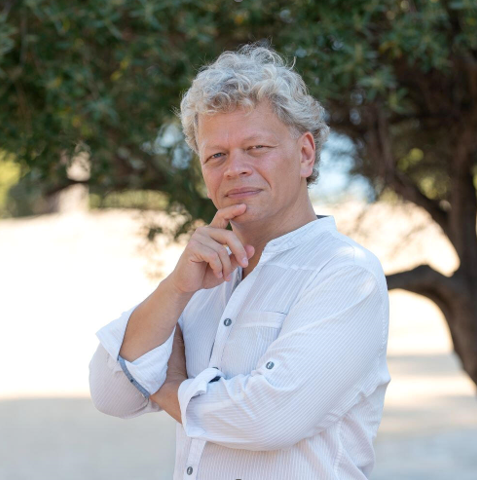
To me, the root of music is empathy
Para mí, la raíz de la música es la empatía
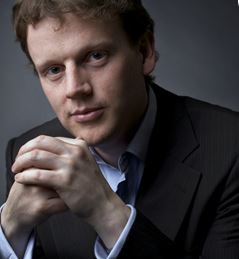
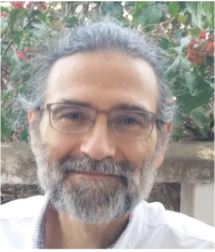
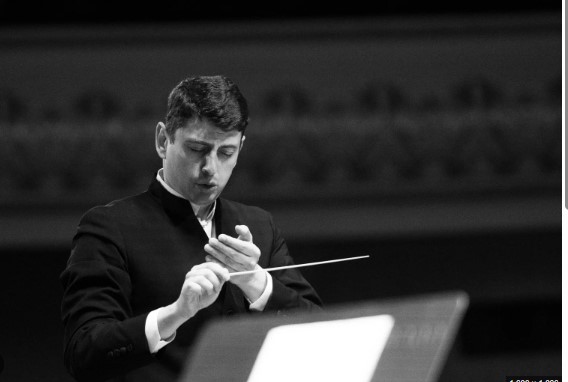
El pasado sábado 16 de mayo por la mañana hemos tenido el placer de entrevistar al reconocido director de orquesta austriaco Achim Holub en la ciudad de Elche (Alicante).
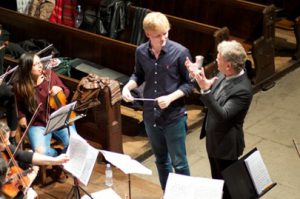 Achim Holub, recibió su primera clase de música a los seis años y pronto decidió ser músico profesional. Estudió dirección con grandes maestros como Milan Horvat en Graz, Michael Gielen en Salzburgo y Ferdinand Leitner en Siena, y hoy en día es el director principal de la London Classical Soloists y director artístico de la Graz Chamber Philarmonic qué fue fundada por él mismo hace 25 años. Durante más de 20 años ha trabajado con orquestas de reconocido prestigio a nivel mundial y, además de ser un pianista con gran experiencia, comparte sus conocimientos en clases y masterclass para músicos.
Nos encontramos con el maestro en el hall de su hotel en la ciudad de Elche, en Alicante. Llevan 6 días intensos de trabajo, junto con la Orquesta Sinfónica Ciudad de Elche y la pianista Yui Higashijima han interpretado el Concierto para piano y orquesta en La menor de Robert Schumann y la Sinfonía n.º 4 de Johannes Brahms. Jueves en Murcia, ayer en Alicante y esta noche aquí en el Gran Teatro de Elche.
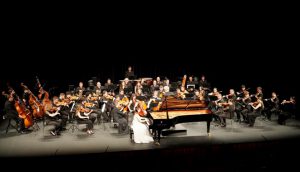
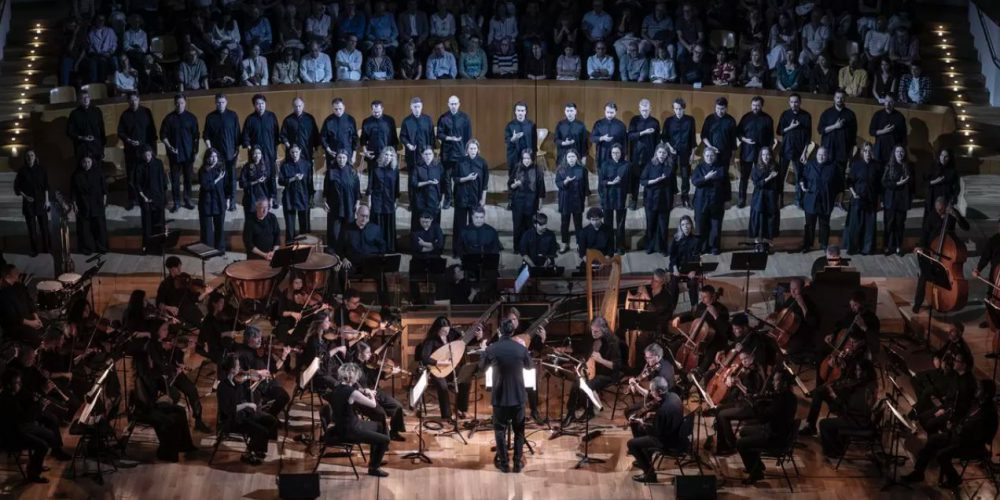
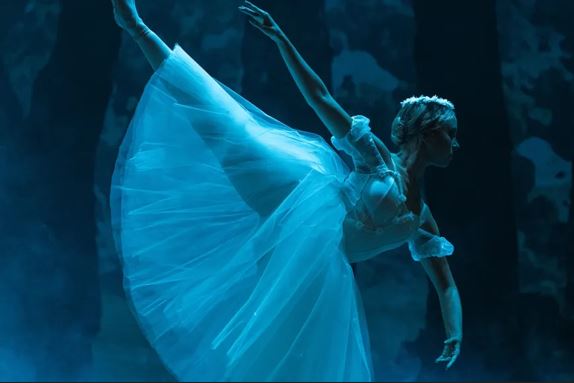
Teatro Circo en Murcia (Spain)
Dotado con una sensibilidad especial y un conocimiento profundo de la música, Achim Holub puede sentir perfectamente todos los detalles que influyen en la calidad de la interpretación música. Nos habla cómo la madera influye notablemente en la calidad de la música en el Teatro Circo en Murcia, y la fantástica acústica del ADDA en Alicante…
Last Saturday, May 16th, we had the pleasure of interviewing the renowned Austrian conductor Achim Holub in the city of Elche (Alicante).
Achim Holub received his first music lesson when he was six years old and soon decided to be a professional musician. He studied conducting with great masters like Milan Horvat in Graz, Michael Gielen in Salzburg, and Ferdinand Leitner in Siena, and today he is the principal conductor of the London Classical Soloists and artistic director of the Graz Chamber Philharmonic, which was founded by himself 25 years ago. For more than 20 years, he has worked with world-renowned orchestras and, besides being a pianist with great experience, he shares his knowledge in lessons and masterclasses for musicians.
We meet the maestro in the lobby of his hotel in the city of Elche, in Alicante. They have had 6 intense days of work; together with the Orquesta Sinfónica Ciudad de Elche and pianist Yui Higashijima, they have performed Robert Schumann’s Piano Concerto in A minor and Johannes Brahms’ Symphony No. 4. Thursday in Murcia, yesterday in Alicante, and tonight here at the Gran Teatro de Elche.
Gifted with great sensitivity and a profound knowledge of music, Achim Holub can perfectly feel every detail that influences the quality of the musical performance. He tells us how wood significantly influences the quality of music at the Teatro Circo in Murcia, and the fantastic acoustics of the ADDA in Alicante…
Usted habla sobre el hall como uno de los parámetros que influyen en la calidad de la interpretación… / You speak about the hall as one of the parameters that influence the quality of the performance…
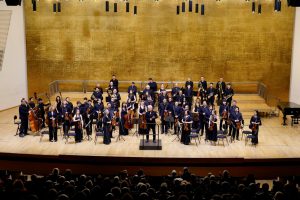
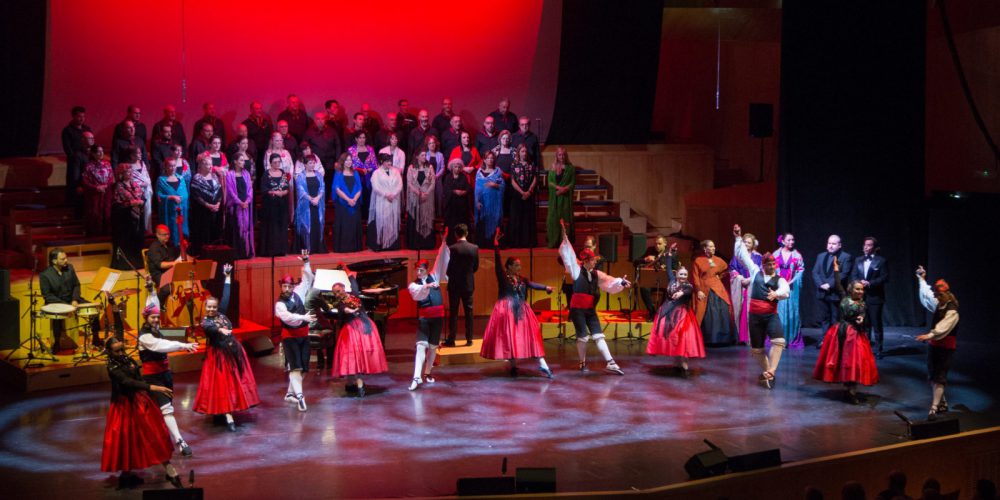
Viernes 15 de mayo en el Adda de Alicante (Spain)
Sí, es un instrumento, y al igual que un violín, o un oboe… cuando lo tocas se adapta a ti. También las personas que hacen música influyen en la sala. Esto es algo físico. Si tú tienes músicos buenos y se crea una energía bonita, esto influye en la sala porque normalmente es de madera. Este es el secreto del Musikverein de Viena. En la famosa Sala Dorada todo es madera, pero las estatuas de mujeres doradas son de barro y están huecas, y son como una caja de resonancia.
Yes, it is an instrument, and just like a violin, or an oboe… when you play it, it adapts to you. The people who make music also influence the hall. This is something physical. If you have good musicians and a beautiful energy is created, this influences the hall because it is usually made of wood. This is the secret of the Musikverein in Vienna. In the famous Golden Hall, everything is wood, but the golden statues of women are made of clay and are hollow, and they act like a sounding board.
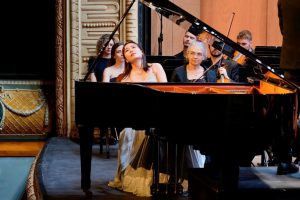
Sábado 16 de mayo en el Gran Teatro de Elche (Spain)
El Adda de Alicante es increíble. Aquí han tocado muy buenos músicos y las orquestas son fantásticas, entonces se puede sentir la energía. Tocas la primera nota y dices “¡Madre mía, este sonido es increíble!”. Las salas, las casas… son cosas vivas. Mi padre era arquitecto y estaba muy influenciado por el movimiento alemán Bauhaus, ellos decían que lo más importante de una casa, o de un edificio, es la energía, más que el aspecto.
The ADDA in Alicante is incredible. Very good musicians have played here and the orchestras are fantastic, so you can feel the energy. You play the first note and you say, ‘My goodness, this sound is incredible!’. Halls, houses… they are living things. My father was an architect and was very influenced by the German Bauhaus movement; they said that the most important thing about a house, or a building, is the energy, more than the look.
¿Qué es para usted lo más importante en la música? / What is the most important thing in music for you?
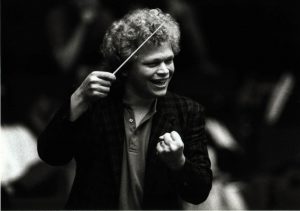 Para mí, la raíz de la música es la empatía. Incluso diría que es lo más importante para mí en la vida. Yo pienso que sí, que el universo se conecta con nosotros a través de la empatía, al igual que las personas entre sí. Por eso es tan importante. Los directores, la orquesta, el público… podemos conectar entre nosotros a través de la empatía. De ahí que todo acto musical sea un acto de empatía. Hay personas que no están de acuerdo porque lo consideran como una debilidad, como algo no importante, pero realmente es el medio, la energía, que puede unir todo. A través de la empatía tú puedes comprender y conectar profundamente con otra persona, con su alma.
Cada concierto es diferente y puede tocar a la gente de forma diferente. En esta ocasión interpretamos la música de Brahms, él sufrió muchísimo. ¿Conocéis la historia? Uno de los hijos de Clara Schumann probablemente era hijo de Brahms, Félix Schumann, que falleció de tuberculosis con 25 años, muy joven. Esta fue quizá la experiencia más traumática para Brahms y le cambió la vida. Yo pienso que a través de esta sinfonía él pudo transformar esta experiencia tan traumática. El primer movimiento es muy pasional, con los violines… y el segundo movimiento es también increíble. En el último momento tú puedes sentir cómo hay una transformación, y esta transformación consiste en la aceptación de la realidad, algo así como que el mundo, en algunos aspectos, puede ser cruel, pero podemos aceptar las cosas como son, y si somos capaces de ver la verdad, nos transformamos.
For me, the root of music is empathy. I would even say it is the most important thing for me in life. I think so, that the universe connects with us through empathy, just like people with each other. That is why it is so important. Conductors, the orchestra, the audience… we can connect with each other through empathy. That is why every musical act is an act of empathy. There are people who disagree because they consider it a weakness, as something not important, but it really is the medium, the energy, that can unite everything. Through empathy, you can understand and connect deeply with another person, with their soul.
Every concert is different and can touch people in a different way. On this occasion, we perform the music of Brahms; he suffered immensely. Do you know the story? One of Clara Schumann’s children was probably Brahms’s son, Felix Schumann, who passed away from tuberculosis at 25 years old, very young. This was perhaps the most traumatic experience for Brahms and it changed his life. I think that through this symphony, he was able to transform this very traumatic experience. The first movement is very passionate, with the violins… and the second movement is also incredible. In the last moment, you can feel how there is a transformation, and this transformation consists of accepting reality, something like the world, in some aspects, can be cruel, but we can accept things as they are, and if we are able to see the truth, we transform.
A través de la música, una persona puede comprender algo, tener alegría, sentir consuelo… que hoy es muy necesario. / Through music, a person can understand something, have joy, feel comfort… which is very necessary today.
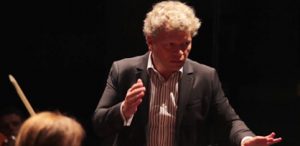
Sí, y sobre todo con los últimos acontecimientos como guerras, el covid y otros. Además, la generación joven sufre especialmente… Esto es muy importante: hay un sociólogo, Émile Durkheim, considerado el padre de la sociología moderna, que hace 130 años predijo lo que está pasando hoy en día. Él dijo que, si la gente no tiene contacto con otra gente, la sociedad perdería el equilibrio. Habla de la empatía y de que es importante que este contacto sea permanente, constante. Si las personas están juntas, hay normas. Para Durkheim lo más importante es que haya normas, no reglas, sino normas. La música no tiene reglas, esto en general la gente no lo contempla, lo que hay son normas que han crecido desde hace miles de años, y todas estas normas, que nacen de ella misma, son buenas. Se diferencian de las reglas en que estas son impuestas, y benefician a los que las hacen. Las normas y los valores son naturales, del ser humano, y son beneficiosos para toda la comunidad. Y si la gente tiene contacto con otra gente, viviremos en una sociedad con normas y valores fuertes.
Yo pienso que esta empatía de los países mediterráneos, también en América Latina… es muy importante. Porque el futuro es que la gente se una y tenga una vida sencilla… No necesitamos lujos grandes…, de verdad, lo que necesitamos es estar con otras personas, y crecer, no tanto en reglas, sino en normas y valores humanos.
Yes, and especially with recent events such as wars, COVID, and others. Furthermore, the younger generation suffers especially… This is very important: there is a sociologist, Émile Durkheim, considered the father of modern sociology, who 130 years ago predicted what is happening today. He said that if people do not have contact with other people, society would lose its balance. He speaks about empathy and that it is important for this contact to be permanent, constant. If people are together, there are norms. For Durkheim, the most important thing is that there are norms, not rules, but norms. Music does not have rules, people generally do not consider this; what exists are norms that have grown for thousands of years, and all these norms, which are born from music itself, are good. They differ from rules in that rules are imposed and benefit those who make them. Norms and values are natural to human beings and are beneficial to the entire community. And if people have contact with other people, we will live in a society with strong norms and values.
I think that this empathy of the Mediterranean countries, also in Latin America… is very important. Because the future is for people to unite and have a simple life… We do not need grand luxuries…, truly, what we need is to be with other people, and to grow, not so much in rules, but in human norms and values.
En algún momento has hablado sobre la necesidad de ser inocente cuando estás haciendo música, tocar sin pensar en las reglas. ¿Qué consejo darías a los músicos jóvenes que se presentan a exámenes, concursos… donde sí hay establecidas unas reglas? / At some point, you have spoken about the need to be innocent when you are making music, to play without thinking about the rules. What advice would you give to young musicians who enter exams, competitions… where rules are established?
Bien, esto para empezar es super difícil. En primer lugar, para mí las competiciones son muy problemáticas. Hay muy muy pocos músicos famosos que han ganado competiciones: Maurizo Pollini, Marta Archerich…, pero son muy pocos, y además estos músicos probablemente no han conseguido su carrera gracias a ganar concursos. Por lo tanto, un concurso es algo interesante para obtener un feedback de otras personas, pero son seres humanos y es posible que, si hay 5 jueces, te vayan a decir 5 cosas diferentes. El problema con los concursos es que muchas veces los músicos que ganan son los que comenten menos fallos, no son los que realizan una interpretación mejor …, pero esto es algo que se sabe en general.
Y otra cosa: La carrera profesional empieza en el conservatorio, donde tienes relaciones estrechas con otros músicos y vas a aprender de ellos. Por ejemplo, yo tuve un profesor de dirección increíble, superfamoso, Milan Horvat, él era director titular de lo que sería la radio televisión austríaca en Viena. Una persona muy amable, pero también fuerte, constantemente decía “Tú puedes hacer todo que tú quieras, pero no así”. Entonces te daba la libertad de seguir tu energía, tu intuición y tus ideas, pero al mismo tiempo te decía “pero esto no va a funcionar.” Y así es como tú aprendes, tú no aprendes si el profesor te dice exactamente lo que tienes que hacer, haz esto así y así, porque él no eres tú. Me viene a la mente Artur Schnabel, un pianista alemán muy famoso y también profesor, y él decía a sus alumnos: “Yo quiero que vosotros cometáis vuestros propios errores, y no los míos”. Los errores son para aprender. Hoy en día esto es un gran problema en nuestra sociedad, con las redes sociales, Instagram y Facebook… la gente no quiere cometer ningún error porque si esto ocurre, al día siguiente vas a llevar un golpe… entonces la gente está así, como paralizada, con miedo. Si no cometes errores, ¿cómo vas a aprender? Esto es imposible. Y esto es un gran problema en la música clásica, que mucha gente se concentra solamente en no cometer ningún error, no en ser comunicativos y crear una energía buena… solo en no cometer errores. Y no hay riesgo, y si no corres ningún riesgo, si no sales de la zona de confort, no hay experiencias nuevas.
Well, to start with, this is super difficult. First of all, for me, competitions are very problematic. There are very, very few famous musicians who have won competitions: Maurizio Pollini, Martha Argerich…, but they are very few, and furthermore, these musicians probably did not achieve their careers thanks to winning competitions. Therefore, a competition is something interesting to get feedback from other people, but they are human beings and it is possible that, if there are 5 judges, they are going to tell you 5 different things. The problem with competitions is that, many times, the musicians who win are the ones who make fewer mistakes, not the ones who give a better performance…, but this is something generally known.
And another thing: The professional career starts at the conservatory, where you have close relationships with other musicians and you are going to learn from them. For example, I had an incredible, super famous conducting professor, Milan Horvat; he was the chief conductor of what would be the Austrian radio and television in Vienna. A very kind but also strong person, he constantly said, ‘You can do everything you want, but not like this.’ So he gave you the freedom to follow your energy, your intuition, and your ideas, but at the same time, he told you, ‘but this is not going to work.’ And that is how you learn; you do not learn if the professor tells you exactly what you have to do—do this like this and like that—because he is not you. Artur Schnabel comes to mind, a very famous German pianist and also a teacher, and he told his students: ‘I want you to make your own mistakes, and not mine.’ Mistakes are for learning. Nowadays, this is a big problem in our society, with social media, Instagram, and Facebook… people do not want to make any mistakes because if that happens, the next day you are going to take a hit… so people are like that, sort of paralyzed, with fear. If you do not make mistakes, how are you going to learn? That is impossible. And this is a big problem in classical music, that many people concentrate only on not making any mistakes, not on being communicative and creating good energy… only on not making mistakes. And there is no risk, and if you do not take any risks, if you do not step out of your comfort zone, there are no new experiences.
He escuchado sus comentarios sobre la tradición austríaca de hacer música: “Nos vemos esta noche. Ustedes conocen la obra, yo conozco la sala”. / I have heard your comments about the Austrian tradition of making music: ‘See you this evening. You know the piece, I know the hall”.
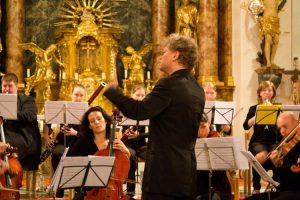
Iglesia de Kumberg (Austria)
Sí, es una frase que el famoso director alemán Hans Knappertsbusch dijo a la Filarmónica de Viena. Los austríacos están muy orgullosos de su historia en la música, muchos compositores famosos, directores, etc. Pero, sobre todo, hay una forma de hacer música que ha sido protegida porque la forma de hacer música actualmente es muy diferente a como se hacía hace 100-150 años. Hoy en día la música se ha convertido en un negocio consumista, en una industria, como las magdalenas del supermercado que no tienen nada que ver con las que haces tú mismo. Sin embargo, en Austria se ha conservado este modo desde los tiempos de Brahms, Beethoven, Mozart… y esto significa que tú estás creando música en el momento. No es un botón, que presionas y ya está. Es una forma viva. Depende de la sala que tienes, de los músicos de la orquesta, del tiempo que hace ese día… Todo es diferente cada vez. Estás creando la música en el momento. Y esto es por lo que las orquestas en Viena no quieren ensayar, porque conocen la música, la han tocado muchísimas veces y el director conoce la música. Yo he escuchado en la Ópera de Viena La valquiria de Wagner dirigida por Horst Stein, sin ensayos ni nada. Fue increíble porque todos estaban superatentos, había comunicación entre unos y otros…, y estas cosas no ocurren si tú ensayas demasiado porque al final sale mecánico… Esta es la filosofía de por qué no se quiere ensayar.
Yes, it is a phrase that the famous German conductor Hans Knappertsbusch told the Vienna Philharmonic. Austrians are very proud of their music history, many famous composers, conductors, etc. But, above all, there is a way of making music that has been protected because the way music is made today is very different from how it was done 100-150 years ago. Nowadays, music has become a consumerist business, an industry, like supermarket muffins that have nothing to do with the ones you make yourself. However, in Austria, this way has been preserved since the times of Brahms, Beethoven, Mozart… and this means that you are creating music in the moment. It is not a button that you press and that’s it. It is a living form. It depends on the hall you have, on the musicians in the orchestra, on the weather that day… Everything is different every time. You are creating the music in the moment. And this is why orchestras in Vienna do not want to rehearse, because they know the music, they have played it many, many times, and the conductor knows the music. At the Vienna State Opera, I heard Wagner’s The Valkyrie conducted by Horst Stein, without any rehearsals at all. It was incredible because everyone was super attentive, there was communication between one another…, and these things do not happen if you rehearse too much because in the end, it comes out mechanical… This is the philosophy of why they do not want to rehearse.
¿Cuál es para usted el papel de la música hoy en día? / What is the role of music in your opinion today?
Por todo lo que hemos estado hablando, la música une a la gente, ayuda a que nos relacionemos…, y esto es muy importante porque aumenta la confianza entre las personas. Las situaciones difíciles se llevan mejor cuando estamos juntos. Por eso, creo que necesitamos más músicos y más orquestas…, y en general potenciar las actividades que fomenten el trabajo en equipo, la empatía hacia los demás, como las artes, el deporte… hablamos de tener experiencias que son reales.
From everything we have been talking about, music unites people, it helps us relate to each other…, and this is very important because it increases trust among people. Difficult situations are easier to handle when we are together. That is why I believe we need more musicians and more orchestras…, and in general, to promote activities that encourage teamwork and empathy toward others, such as the arts, sports… we are talking about having experiences that are real.
Agradecemos al maestro Achim Holub por compartir generosamente su tiempo, sus ideas y sus reflexiones con nosotros y a Isabel Sepulcre Canto que con tanta amabilidad y rapidez nos ayudó a tener este encuentro con Achim. Pensamos que sí, que la empatía y la conexión entre la gente son grandes cualidades humanas a desarrollar y que la música juega un gran papel en esta empresa, porque la unión de la gente buena será la que ayude al mundo a realizar este cambio hacia el bien y la bondad tan importante que la sociedad necesita.
A fecha de la publicación de esta entrevista, unos días más tarde del concierto, hemos recibido las críticas fantásticas y los vídeos de la maravillosa ovación del público al acabar el concierto de la espectacular Orquesta Sinfónica Ciudad de Elche dirigida por Achim Holub. Sin duda el auditorio se llevó consigo esta experiencia real, maravillosa y transformadora que la buena música de manos de los buenos músicos nos puede regalar.
We thank maestro Achim Holub for generously sharing his time, his ideas, and his reflections with us, and Isabel Sepulcre Canto, who so kindly and quickly helped us have this meeting with Achim. We think so, that empathy and connection between people are great human qualities to develop and that music plays a major role in this endeavour, because the union of good people will be what helps the world make this very important change toward good and kindness that society needs.
As of the publication date of this interview, a few days after the concert, we have received fantastic reviews and videos of the wonderful standing ovation from the audience at the end of the concert by the spectacular Orquesta Sinfónica Ciudad de Elche conducted by Achim Holub in Elche. Without a doubt, the audience took with them this real, wonderful, and transformative experience that good music in the hands of good musicians can give us.
Anna Bella y Cardimina Almela